Natural Light vs Artificial Light: When to Use Each
Author: Fiat Lux Guides Editorial Team Reviewer: Fiat Lux Guides Editorial Team Most recently reviewed First published Filed under Natural Light
Natural light is free, broad, and easy to read with your eyes, while artificial light gives you repeatable brightness, direction, and color temperature at any hour. Choose natural light for fast setups near windows or open shade, and switch to LEDs or flash when weather, time of day, or dim interiors limit consistency.
Belongs to the guide: Natural Light Photography: A Beginner Guide
Natural light gives you a free, full-spectrum source that is effortless to read with your eyes, while artificial light gives you repeatable brightness, placement, and color at any hour of the day. Inside our window and outdoor light techniques pillar, this guide compares both approaches so you know when window or outdoor light is enough and when to bring in LEDs or flash.
Natural light vs. artificial light at a glance
| Attribute | Natural light (sun / window) | Continuous LED | Flash / studio strobe |
|---|---|---|---|
| Equipment cost | None (optional reflector/diffuser) | Moderate; fixture + stand | Moderate; flash/strobe + trigger |
| Color stability | Shifts with clouds, shade, and solar angle (5200–7000 K) | Fixed or dial-in CCT (e.g., 2700–6500 K) | Consistent daylight-balanced burst |
| Output control | Distance, curtains, reflectors, time of day | Continuous dimming | Power steps (e.g., 1/1 down to 1/64+) |
| Video suitability | Yes, if brightness stays steady | Yes, designed for continuous video | No (still photography only) |
| Motion freezing | Depends on shutter speed | Depends on shutter speed | Very short flash duration freezes motion |
When is natural light the better choice?
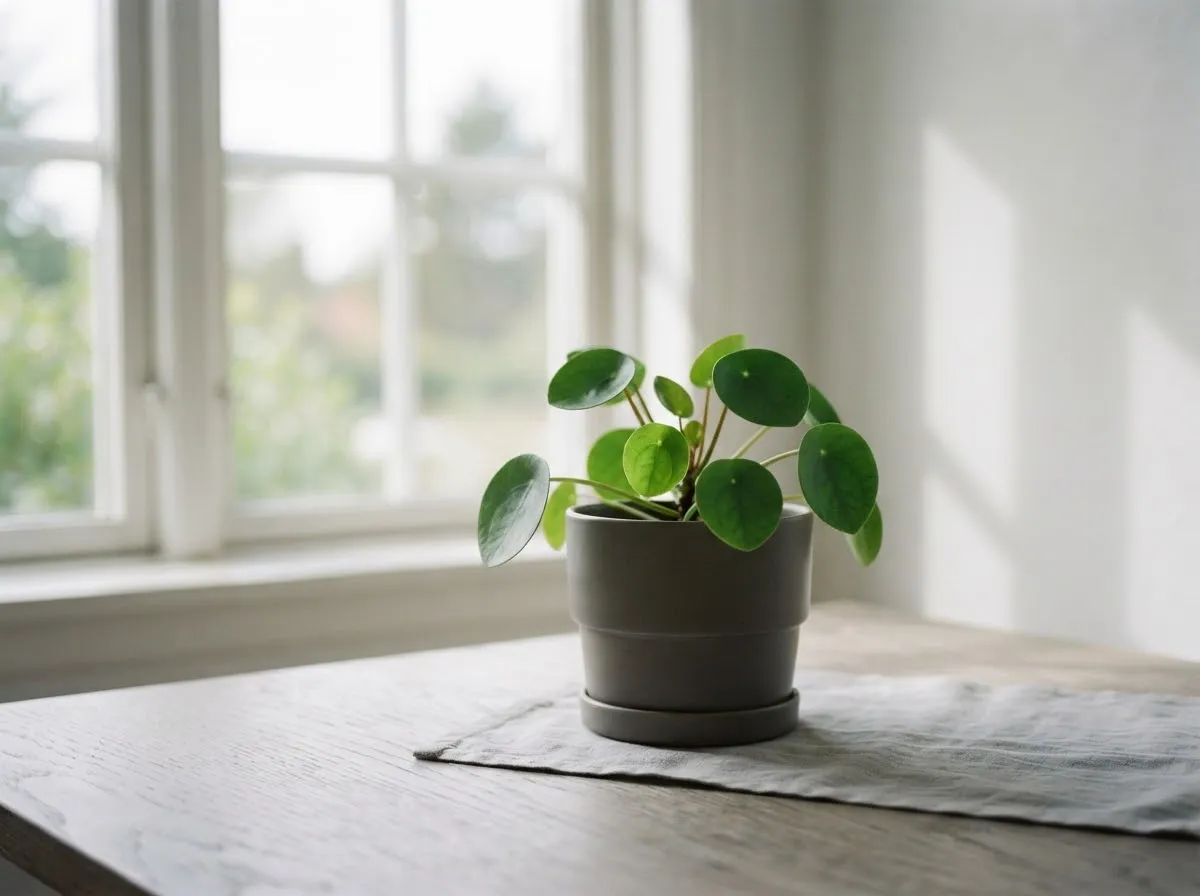
Choose natural light when you have access to a large window, open shade and overcast light, or steady golden hour photography conditions and want to travel light. Because the sun and sky are massive sources, they illuminate rooms and landscapes evenly without requiring stands, cables, or power outlets.
Natural light works especially well for:
- Learning light direction and shadow quality: What you see with your eyes matches what the camera records, making it simple to adjust subject angles by a window.
- Fast, single-person setups: Portraits, food, and small-product shoots next to a window need little more than a white foam board from our reflectors and diffusers for natural light guide.
- Full-spectrum color accuracy: Real daylight naturally contains a smooth, continuous spectrum of wavelengths—which is why CIE Standard Illuminant D65 serves as an international benchmark for daylight colorimetry.
The trade-off is unpredictability. As clouds pass or the sun moves, both brightness and color temperature shift. The Canon EOS R8 White Balance table lists direct daylight at approximately 5200 K, cloudy weather at 6000 K, and shade at 7000 K.
When should you switch to artificial light?
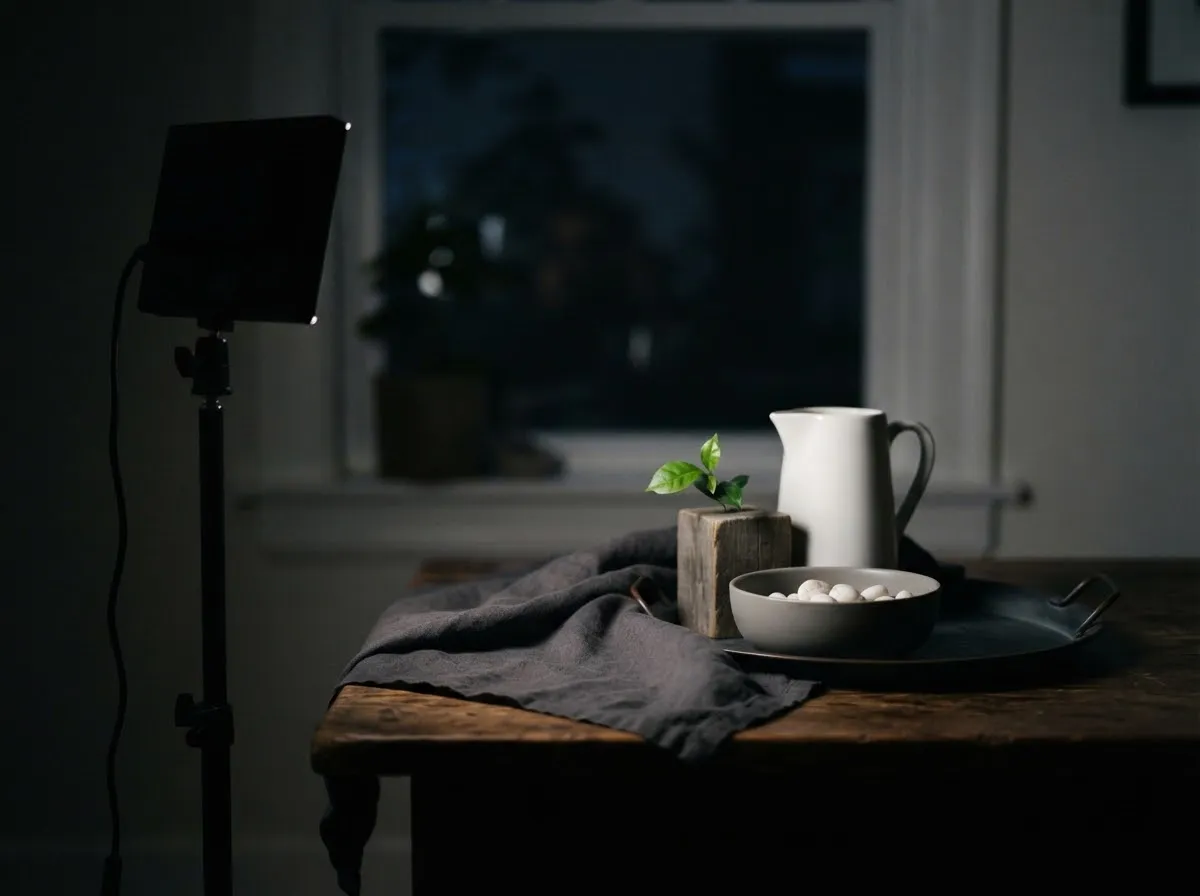
Choose artificial light whenever you need consistent brightness, repeatable color, or control over light direction independent of windows and weather. Powered lights let you shoot at midnight, match exposure across a four-hour product catalog shoot, or place a key light in a windowless room.
Two main categories cover most photo and video work—explore both in Choosing between LEDs, strobes and speedlights:
- Continuous LEDs: Ideal for video, livestreams, and beginners who want to see shadows in real time. A bi-color panel such as the amaran P60x lets you dial color temperature from 3200 K to 6500 K with CRI ≥ 95 and TLCI ≥ 97, and dim output continuously.
- Speedlights and studio strobes: Built for still photography when you need high output or fast motion freezing. For example, the Canon Speedlite EL-10 delivers a maximum guide number of 40.5 m at ISO 100 (105 mm zoom), packing enough punch to overpower dim interiors or freeze action at low ISO.
Always follow the manufacturer’s manual when operating mains-powered or high-output studio lighting.
Can you mix natural light and artificial light?
Yes—combining window light with an LED or flash works cleanly when you match their color temperatures and control ambient room lamps. For instance, you can use a window as a soft side light and add a bi-color LED set to 5600 K (or a daylight-balanced speedlight) as your fill or rim light.
Avoid mixing window daylight with warm 3200 K household bulbs, which creates split orange-and-blue color casts across your subject. Read mixed lighting and color casts for step-by-step fixes, or preview Kelvin values with our Kelvin chart.
Which should you choose for your next shoot?
- Start with natural light if you are shooting daytime stills near a bright window or outdoors in open shade, and want zero gear overhead.
- Use continuous LEDs if you are recording video, streaming, or working in a fixed indoor desk setup where consistent brightness matters.
- Use flash or strobes if you are shooting still photos in dim rooms, need deep depth of field at low ISO, or must freeze fast motion.
For details on how we verify technical claims and manufacturer specifications, read our sourcing rules.
| Attribute | Natural light (sun / window) | Continuous LED | Flash / studio strobe |
|---|---|---|---|
| Equipment cost | None (optional reflector/diffuser) | Moderate; fixture + stand | Moderate; flash/strobe + trigger |
| Color stability | Shifts with clouds, shade, and solar angle (5200–7000 K) | Fixed or dial-in CCT (e.g., 2700–6500 K) | Consistent daylight-balanced burst |
| Output control | Distance, curtains, reflectors, time of day | Continuous dimming | Power steps (e.g., 1/1 down to 1/64+) |
| Video suitability | Yes, if brightness stays steady | Yes, designed for continuous video | Not practical (built for still photography) |
| Motion freezing | Depends on shutter speed | Depends on shutter speed | Very short flash duration freezes motion |
Use natural light when you have bright, steady window light or open shade and want minimal gear. Use continuous LEDs for video and predictable indoor setups, and use flash or strobes when you need high output, low ISO, or motion-freezing bursts.
Common questions
Is natural light better than artificial light for beginners?
Natural light is easier to start with because it costs nothing, requires no stands or triggers, and lets you see shadows immediately with your own eyes. Once you understand direction and softness near a window, adding artificial lights becomes much simpler.
When should you choose artificial light over natural light?
Switch to artificial light when you need identical exposure and color across a multi-hour shoot, when you are filming after dark, or when indoor window light forces high ISO and blurry shutter speeds. Powered lights also let you place a key light anywhere in a room, regardless of where windows sit.
Why does natural light change color during a shoot?
Natural daylight shifts as clouds pass, the sun moves lower in the sky, or a subject steps from direct sun into shade. Camera manuals list direct daylight near 5200 K, cloudy sky near 6000 K, and open shade near 7000 K, so white balance drifts unless conditions stay steady.
Can you mix natural window light with artificial lights?
Yes, as long as you match the color temperature of your artificial light to the window light. Set a bi-color LED to match daylight (around 5200 K to 6000 K) or use a daylight-balanced flash, and turn off warm indoor room lamps that introduce orange casts.
Why use flash instead of continuous LED lights for photography?
A compact speedlight or studio strobe can deliver far more instantaneous light output than a continuous LED panel of similar size, allowing lower ISO settings and smaller apertures. Flash bursts also freeze fast movement that would blur under slower continuous-light shutter speeds.
What we checked
- Canon EOS R8 Product Manual — White Balance (checked 2026-11-14) (cam.start.canon)
- Aputure Help Center — amaran P60x & P60c Photometrics & Technical Specifications (checked 2026-11-14) (help.aputure.com)
- Canon Speedlite EL-10 Product Manual — Specifications (checked 2026-11-14) (cam.start.canon)
- CIE — Colorimetry Part 2: CIE Standard Illuminants (checked 2026-11-14) (cie.co.at)
You might also like
- Natural Light Photography: A Beginner Guide
Learn natural light photography: how sun angle, window size, open shade, and overcast skies shape shadow softness, color temperature, and exposure.
- Backlight and Rim Light with a Window
How to shoot backlit window portraits and rim light using metering, exposure lock, flare control, and reflector fill without blowing out skin tones.
- Food Photography with Window Light
Use side light, backlight, sheer diffusion, and bounce cards to shape texture and highlights in food photography with window light.
- Golden Hour Photography Explained
Learn what causes golden hour light, when it occurs by solar elevation, how long it lasts, and which white balance and camera settings preserve warm tones.
- Indoor Natural Light Photography Without Flash
How to shoot indoor natural light photography without flash using window placement, camera exposure settings, white balance, and falloff control.
- Open Shade and Overcast Light for Photos
How to find open shade, use overcast clouds as a giant softbox, fix blue color casts with white balance, and keep catchlights in outdoor portraits.