Indoor Natural Light Photography Without Flash
Author: Fiat Lux Guides Editorial Team Reviewer: Fiat Lux Guides Editorial Team Most recently reviewed First published Filed under Natural Light
Indoor natural light photography without flash relies on placing your subject close to a window, turning off indoor lamps that cause mixed color casts, and balancing shutter speed, aperture, and ISO for dim interiors. Because window light drops rapidly with distance under the inverse-square law, moving closer to the glass raises brightness and softens shadow edges at the same time.
Belongs to the guide: Natural Light Photography: A Beginner Guide
Shooting indoors without a flash means treating every window as your primary studio light. As part of our daylight photography basics guide series, this walkthrough covers how to position a subject near a window, control contrast and background falloff, and dial in camera exposure and white balance for clean results.
Where should you place your subject indoors?
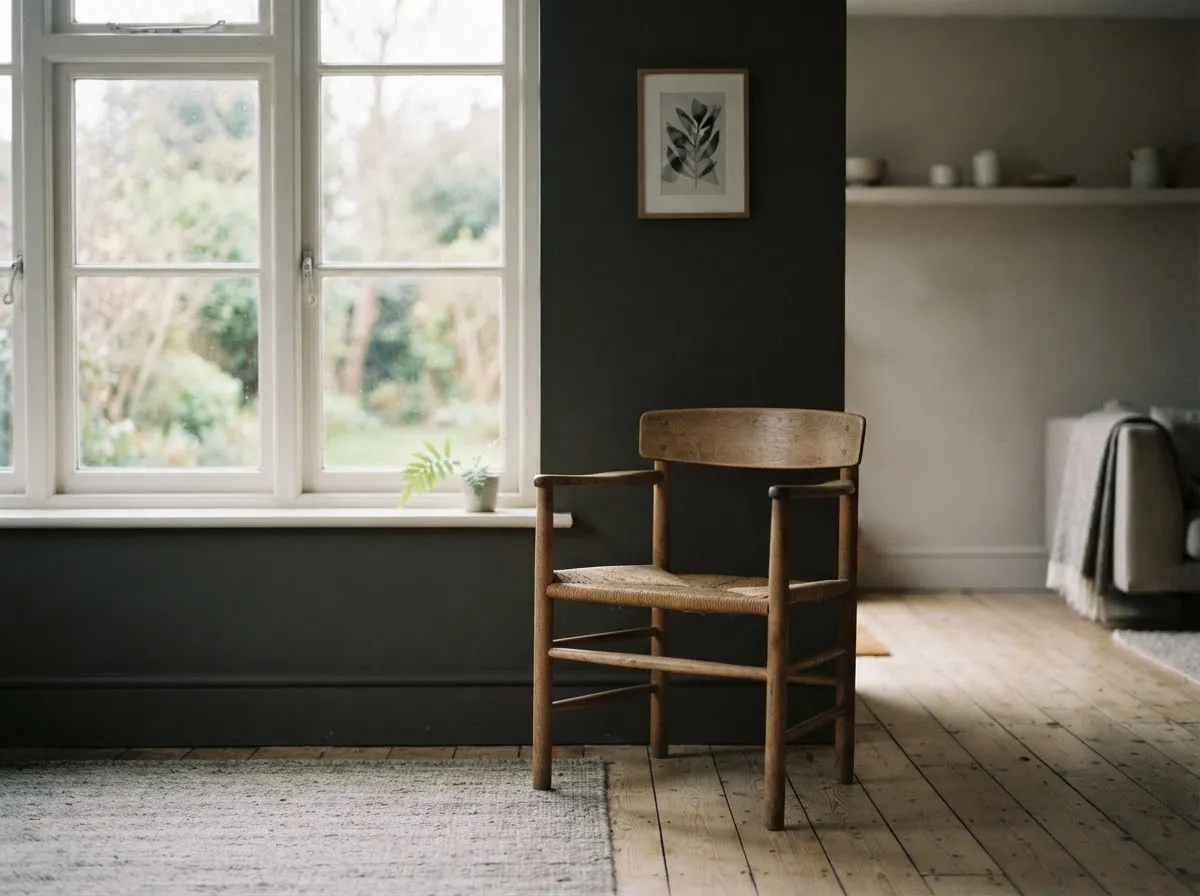
Place your subject close to a large window and turn off all artificial room lights before taking a test frame. Proximity to the glass maximizes both brightness and apparent light-source size, which softens shadow transitions across the face or object.
Two geometric factors control how window light looks:
- Distance from the window: Moving a subject closer to the glass increases illuminance rapidly and makes the window fill a wider angle from the subject’s perspective. As explained in our window light portrait setup guide, a wider apparent source produces softer-edged shadows.
- Angle to the window: Facing the window directly flattens facial contours and minimizes shadows. Turning the subject and camera so the window sits to one side creates modeling and depth, while placing the window behind the subject produces backlight and rim light with a window.
If the window receives direct, harsh sunlight, hang a sheer white curtain or translucent diffusion panel across the frame to scatter the beam into an even, soft source.
Why does light fall off so fast inside a room?
Light from a window spreads over a wider area as it travels into a room, causing brightness to drop steeply just a few steps away from the glass. Under the inverse-square law described in HyperPhysics, doubling the distance from a small source cuts illuminance to one-fourth—a loss of two full exposure stops.
While a large window acts as an extended area source rather than a tiny point source right next to the glass, falloff is still dramatic across a typical room:
- Subject near the window, background deep in the room: The subject receives bright window light while the far wall receives only a fraction of that illuminance, naturally darkening cluttered backgrounds.
- Subject and background both close to the window: Both receive similar light levels, keeping the room bright and airy.
You can preview exact distance-to-stop changes using our light distance exposure calculator.
How do you set camera exposure without flash?
Open your aperture, choose a shutter speed fast enough to prevent motion blur, and let ISO make up the remaining light. Because indoor window light is much dimmer than outdoor sun, balancing these three controls keeps images sharp without underexposing.
- Aperture: Use a wider aperture (smaller f-number such as f/1.8, f/2.8, or f/4) to let more light hit the sensor per second. Keep in mind that very wide apertures narrow your depth of field, so focus carefully on the subject’s eyes.
- Shutter speed: Set a shutter speed fast enough to freeze your subject and prevent camera shake. For stationary subjects on a tripod, slower shutter speeds allow lower ISO values; for handheld portraits of moving people, keep the shutter speed brisk and raise ISO instead.
- ISO: Increase ISO in 1/3-stop increments—as documented in the Canon EOS R8 ISO speed guide—until the exposure meter reaches your target. Modern sensors tolerate moderate ISO increases far better than motion blur from a too-slow shutter speed.
- Exposure compensation: If bright window frames in the background fool your camera’s meter into darkening the subject, dial in positive manual exposure compensation in small steps, checking the histogram, or switch to manual mode.
What white balance works best for indoor window light?
Turn off overhead tungsten, halogen, or fluorescent bulbs, then match your camera’s white balance to the sky outside the window. Mixing indoor bulbs with window daylight creates conflicting color casts that cannot be fixed globally in editing.
Camera manuals show why mixed sources clash. The Canon EOS R8 White Balance reference lists these approximate color temperatures:
| Light source | Approximate Kelvin (K) |
|---|---|
| Tungsten light | 3200 K |
| White fluorescent light | 4000 K |
| Daylight | 5200 K |
| Cloudy, twilight, sunset | 6000 K |
| Shade | 7000 K |
When a 3200 K table lamp hits one side of a face and 7000 K north-facing sky light hits the other, Auto White Balance can only neutralize one side, leaving the other overly orange or blue. Turning off room lamps—as detailed in mixed lighting and color casts—gives you one clean daylight color temperature across the entire frame. You can also check open shade and overcast light or use our Light-matching tool to preview how sky conditions shift color.
How do you fill shadows without adding a flash?
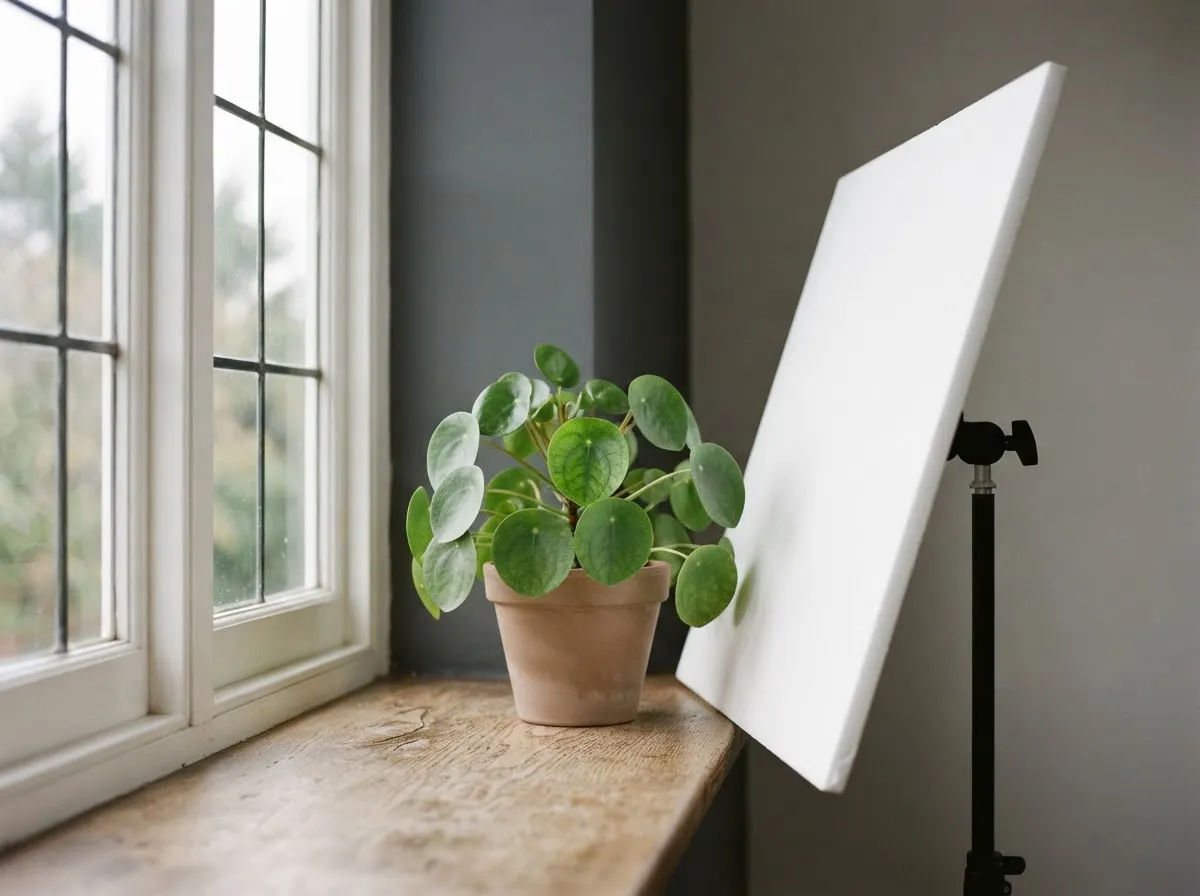
Bounce existing window light back onto the shadow side of your subject using a matte white surface or collapsible reflector. Under the law of reflection (OpenStax College Physics 2e), rough matte surfaces like white foam board or fabric scatter light in many directions (diffuse reflection), producing soft fill light without harsh hotspots.
Place the reflector on the side of the subject opposite the window, angled toward the window so it catches incoming light and redirects it toward the subject’s shadow side. Move the reflector closer for stronger fill or farther away for deeper, more dramatic shadows. See our guide to reflectors and diffusers for natural light for surface choices and positioning.
For more on how we verify technical claims and camera settings, read our fact-checking process.
Common questions
How do I shoot indoor natural light photography without a flash?
Place your subject next to the largest available window, turn off overhead room lamps to avoid mixed color casts, and open your lens aperture to gather more light. If the shutter speed drops too low for sharp handheld shots, raise the ISO until exposure balances cleanly.
Should I turn off room lights when shooting with window light?
Yes, turning off indoor lamps prevents warm tungsten or fluorescent bulbs from mixing with cooler daylight. Camera manuals list tungsten light around 3200 K and daylight or shade between 5200 K and 7000 K, so combining them leaves skin tones looking simultaneously orange and blue.
Why does window light get dark so quickly inside a room?
Light spreads out as it travels away from the window, so illuminance drops sharply with distance. Under the inverse-square law for a point source, doubling your distance from the light cuts brightness to one-quarter, or two full exposure stops, making the back of a room far dimmer than the sill.
What white balance setting works best for indoor window light?
Start with Daylight (around 5200 K) for direct sun through a window, or Cloudy (6000 K) and Shade (7000 K) when the window faces open sky without direct sun. Shooting in RAW also lets you fine-tune the Kelvin value afterward without losing image data.
How can I brighten the shadow side of a subject without a flash?
Use a white wall, poster board, or collapsible white reflector on the side opposite the window to bounce incoming daylight back into the shadows. Moving the reflector closer to the subject increases fill brightness without adding any artificial light source.
What we checked
- HyperPhysics — Inverse Square Law for Light (checked 2026-11-14) (hyperphysics.phy-astr.gsu.edu)
- Canon EOS R8 Product Manual — White Balance (checked 2026-11-14) (cam.start.canon)
- Canon EOS R8 Product Manual — ISO Speed Settings for Still Photos (checked 2026-11-14) (cam.start.canon)
- Canon EOS R8 Product Manual — Manual Exposure Compensation (checked 2026-11-14) (cam.start.canon)
- OpenStax College Physics 2e — 25.2 The Law of Reflection (checked 2026-11-14) (openstax.org)
You might also like
- Natural Light Photography: A Beginner Guide
Learn natural light photography: how sun angle, window size, open shade, and overcast skies shape shadow softness, color temperature, and exposure.
- Backlight and Rim Light with a Window
How to shoot backlit window portraits and rim light using metering, exposure lock, flare control, and reflector fill without blowing out skin tones.
- Food Photography with Window Light
Use side light, backlight, sheer diffusion, and bounce cards to shape texture and highlights in food photography with window light.
- Golden Hour Photography Explained
Learn what causes golden hour light, when it occurs by solar elevation, how long it lasts, and which white balance and camera settings preserve warm tones.
- Natural Light vs Artificial Light: When to Use Each
Natural light vs artificial light compared on cost, color stability, power, and control so you can decide when window light or studio gear fits best.
- Open Shade and Overcast Light for Photos
How to find open shade, use overcast clouds as a giant softbox, fix blue color casts with white balance, and keep catchlights in outdoor portraits.