Softbox vs Umbrella: Light Quality and Control
Author: Fiat Lux Guides Editorial Team Reviewer: Fiat Lux Guides Editorial Team Most recently reviewed First published Filed under Lighting Gear
Softboxes enclose the light source to give you directional control and minimal wall spill, while umbrellas spread light broadly across a room and set up in seconds. Choose a softbox when you want clean backgrounds and controlled shadows in tight spaces; choose an umbrella for fast, portable, wide coverage.
Belongs to the guide: LED vs Strobe vs Speedlight: What to Start With
Checked by Fiat Lux Guides’ editorial desk against the cited sources.
Choosing between a softbox and an umbrella is one of the first modifier decisions you face when building a kit around Continuous versus flash gear comparison sources. Both modifiers enlarge a small, harsh bulb or flash tube into a broad, flattering light source—but they behave very differently once you turn the light on.
In practice, the choice rarely comes down to “which makes softer light.” As we cover in light modifiers explained and hard light vs soft light, softness is governed by the apparent size of the light from your subject’s perspective. What truly separates a softbox from an umbrella is light control, spill, and setup speed.
Softbox vs umbrella at a glance
| Attribute | Softbox | Umbrella (Shoot-Through or Reflective) |
|---|---|---|
| Light spread | Focused forward; easily narrowed with grids | Broad 180-degree or wide bounce spread |
| Spill control | High; black housing blocks rear and side spill | Low; light spills onto walls and ceilings |
| Setup and pack-down | Moderate (faster with quick-release frames) | Fast; opens like a rain umbrella |
| Catchlight shape | Rectangular, square, or octagonal | Round (with visible spoke shadows on reflective types) |
How does a softbox shape light?
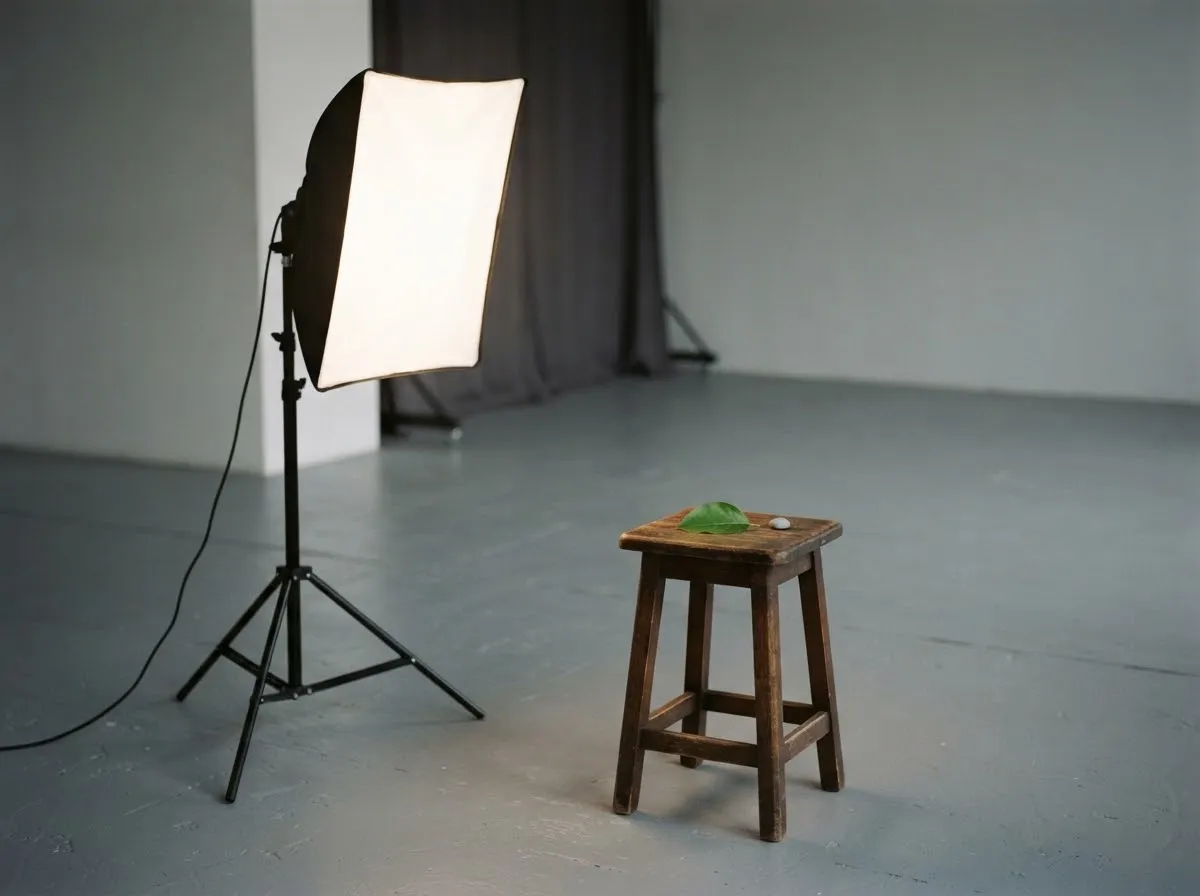
A softbox encloses your light inside a black-backed, silver-lined housing so light exits only through the front diffusion panels. Many softboxes, including Godox’s quick-release ST/SW umbrella-softbox series, use an inner baffle plus a front diffuser. The inner baffle spreads the initial beam evenly across the front fabric so you do not get a bright “hot spot” in the center.
Because the back and sides are opaque, almost no light escapes behind the modifier. Many softboxes also feature a recessed front lip and hook-and-loop edges for attaching a fabric egg-crate grid, which narrows the beam angle further and keeps light off nearby walls or backdrops.
Strengths of a softbox
- Clean background control: You can light a subject in a small room with white walls and still keep the background dark, because stray light is contained.
- Feathering precision: You can aim the edge of the softbox past your subject to wrap soft light across their face without illuminating the room behind them.
- Clean catchlights: The continuous front fabric creates a solid rectangular or octagonal reflection in the subject’s eyes without visible ribs or stand hardware.
How does an umbrella shape light?
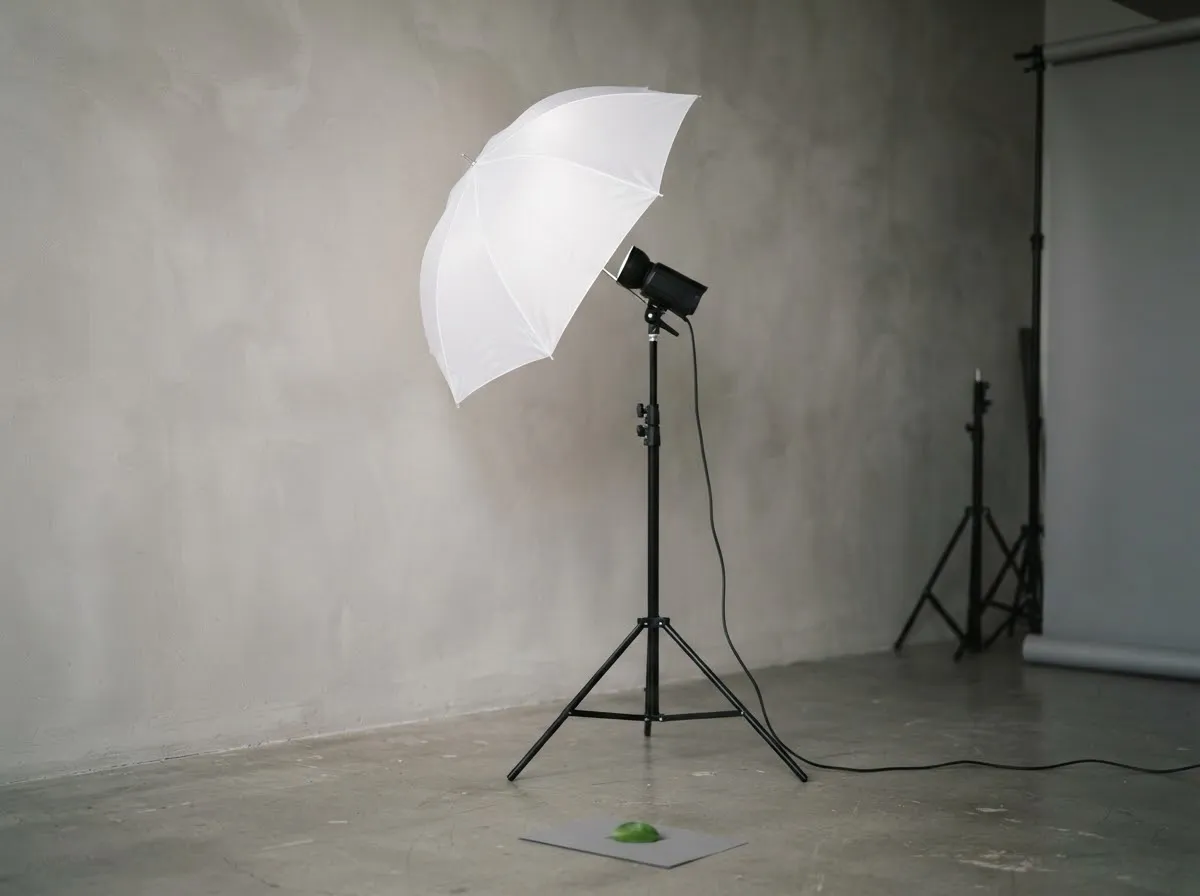
An umbrella is an open, curved modifier that either bounces light off an interior surface or lets light pass through translucent white fabric. Profoto’s on-location modifier guide describes umbrellas as “Lightweight, portable, and fast to set up” and shows one used to wrap flash around a portrait subject and fill shadows.
Umbrellas come in two main styles:
- Shoot-through (translucent) umbrellas: You aim the light through the white fabric toward your subject. Because the fabric is open on the back, light radiates forward and backward, bouncing off ceilings and walls to lift shadows across the whole room.
- Reflective umbrellas (white or silver): You point the light away from the subject into the umbrella’s curved interior, which bounces it back toward the scene. Black backing stops rear spill, though light still spreads widely from the open rim.
Strengths of an umbrella
- Speed and portability: An umbrella opens in seconds, folds into a slim tube, and mounts directly into a standard umbrella bracket without a heavy speedring.
- Broad room fill: When you want to illuminate a group, a wide interior, or fill shadows naturally by bouncing off white walls, an umbrella’s wide spread works in your favor.
- Hybrid options: Some modifiers bridge the gap. Westcott’s Halo, for example, collapses to the size of an umbrella, sets up without speedrings and advertises a 180-degree light spread, and Profoto makes a backpanel that pulls over a translucent umbrella to reduce backward light leakage.
Which produces softer light?
At the same diameter and distance, a softbox and an umbrella produce nearly identical shadow-edge softness. Shadow transition is determined by the angular size of the radiating surface relative to the subject—a principle you can explore with our softbox softness calculator and inverse square law of light.
The perceived difference comes from contrast and spill:
- An umbrella bounces stray light off nearby walls and ceilings, which fills in the shadows on the unlit side of your subject and lowers overall contrast.
- A softbox prevents that room bounce, leaving shadows deeper and cleaner unless you intentionally add a reflector or fill light.
Which should you choose?
- Choose a softbox if you shoot in a small room or want moody contrast. When walls are close, an umbrella’s wide spill turns the entire room into a giant fill card, washing out shadow depth and tinting your subject if the walls are colored.
- Choose an umbrella if you travel light or need fast setup. For quick on-location portraits, event fill, or lighting large groups on a budget, an umbrella’s speed and compact pack-down size are hard to beat.
- Consider a hybrid umbrella-softbox if you want the fast pop-open frame of an umbrella with the enclosed, spill-free front face of a softbox.
Whichever modifier you choose, check your light’s mounting hardware and follow the maker’s manual when rigging stands outdoors, where large modifiers can catch wind easily. For more on how we evaluate lighting concepts, see our review standards.
| Attribute | Softbox | Umbrella (Shoot-Through or Reflective) |
|---|---|---|
| Light spread | Focused forward; easily narrowed with grids | Broad 180-degree or wide bounce spread |
| Spill control | High; black housing blocks rear and side spill | Low; light spills onto walls and ceilings |
| Setup and pack-down | Moderate (faster with quick-release frames) | Fast; opens like a rain umbrella |
| Catchlight shape | Rectangular, square, or octagonal | Round (with visible spoke shadows on reflective types) |
Choose a softbox for controlled studio or small-room lighting where keeping light off the background matters; choose an umbrella for fast, portable, broad fill or on-location setups.
Common questions
Is a softbox softer than an umbrella of the same size?
Light softness depends primarily on the modifier's apparent size relative to the subject, not whether it is a softbox or an umbrella. At the same diameter and distance, a softbox and an umbrella produce similarly soft shadow edges, though a softbox keeps spill off nearby walls and creates a more directional falloff.
What is the difference between a shoot-through umbrella and a reflective umbrella?
A shoot-through umbrella uses translucent white fabric placed between the light and your subject, transmitting light forward while also spilling some light backward. A reflective umbrella faces away from the subject so the light bounces off a white or silver interior, giving slightly more directional bounce and higher efficiency.
Why does a softbox control spill better than an umbrella?
A softbox wraps the flash or LED inside an opaque, black-backed tent with a reflective interior and front diffusion panel. Because light can only exit through the front face, very little stray light hits your walls, ceiling, or background compared to an open umbrella.
Can you turn an umbrella into a softbox?
Yes, partially. Profoto offers a backpanel (white inside, black outside) that pulls over a translucent umbrella like a shower cap, reducing rear light leakage so more light goes forward. However, a standard umbrella still lacks the recessed front lip and grid compatibility of a true softbox.
Which is better for beginners: a softbox or an umbrella?
Umbrellas are an easy way to start because they fold small, need no speedring, and mount on a stand with a simple umbrella bracket. Once you shoot in small rooms or want darker, moodier backgrounds without wall bounce, a quick-release softbox gives you much tighter control.
What we checked
- Profoto: Umbrella Backpanel product page, checked 2026-11-14 (profoto.com)
- Profoto: The 3 Best Modifiers for On-Location Photography, checked 2026-11-14 (profoto.com)
- Godox: ST/SW Series Quick Release Umbrella Softbox Specifications, checked 2026-11-14 (godox.com)
- Westcott: Halo Mono Softbox, 45-inch, product page, checked 2026-11-14 (fjwestcott.com)
You might also like
- LED vs Strobe vs Speedlight: What to Start With
Compare continuous LED lights, camera speedlights, and studio strobes by output units, shutter sync, color control, and video use to pick your first light.
- Battery vs Mains-Powered Lights for Photo and Video
Compare battery and AC mains-powered photo and video lights on output limits, runtime, cable safety, portability, and fan noise before you buy.
- Bi-Color vs RGB LED Lights: What Each Does
Bi-color vs RGB LED lights compared on CCT range, white-light brightness, CRI/TLCI accuracy, green-magenta tint, and creative color modes.
- Budget Photo and Video Lighting Kit Guide
Build a budget photo and video lighting kit around one key light, a modifier, and a stand. Compare starter kit categories by output and control.
- Continuous LED Lights for Beginners
Learn how continuous LED video and photo lights work, how CRI and TLCI ratings affect color accuracy, and how to compare panel and COB fixtures.
- Flash Guide Number Explained
How flash guide numbers work: the GN = distance x f-number formula, meters vs feet, zoom head effects, ISO scaling, and power steps.